IJAW STRUGGLE: Gbaramatu Elder Orubu appeals to Tompolo for recognition, cites decades of sacrifice
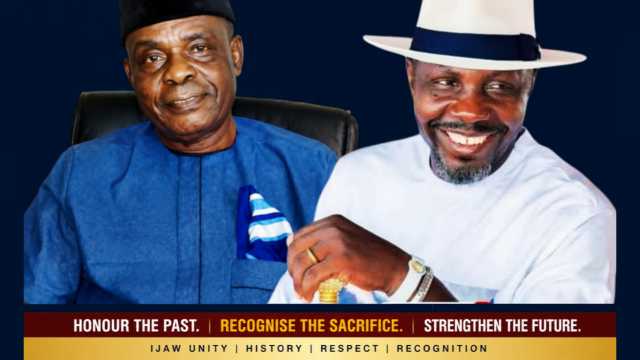
An elder statesman and one of the prominent figures in the struggle for the political emancipation of the Ijaw people, Chief James G. Orubu, has made a passionate public appeal to the General Officer Commanding the Ijaw Nation (G.O.C.I.N), High Chief Government Oweizide Ekpemupolo alias Tompolo, urging the Niger Delta leader to recognise and reward his decades of sacrifices and contributions to the development of Gbaramatu Kingdom and the broader Ijaw struggle.
In an open letter addressed to Tompolo, dated 17 July 2026, Orubu, who described himself as an octogenarian, said he deemed it necessary to remind the Ijaw leader that he remains alive despite his advanced age, and has continued to witness the progress of the struggle he helped to pioneer.
According to him, his appeal was not borne out of bitterness, but from the conviction that those who laid the foundation for the emancipation of the Ijaw people should not be forgotten as younger generations continue the struggle.
Recounting some of his contributions, Orubu stated that he was among the pioneer pupils of Oporoza Primary School who participated in clearing the land that later became the site of the palace of the Pere of Gbaramatu Kingdom, and also recalled leading the peace initiative that resolved a long-standing conflict between Inikorogha and Azama communities, describing it as one of several interventions aimed at promoting unity and stability within the kingdom.
Orubu further revealed that he was the only Ijaw delegate who refused to sign the political agreement known as "The Dawn of a New Era," arguing that the document failed to address the political aspirations and freedom of the Ijaw people, and maintained that his refusal subjected him to years of political and economic victimisation, including the denial of appointments and government contracts.
The elder statesman also referenced his participation in the Warri Local Government chairmanship election, claiming he contested as a consensus candidate of the Ijaw and Urhobo people before allegedly being rigged out of the process. He cited the Supreme Court judgment in Orubu v. NEC (1988) as part of the historical record surrounding the election.
Highlighting his legal activism, Orubu said he was the first to institute legal action against the Independent National Electoral Commission (INEC) over what he described as an unfair ward arrangement affecting the Warri Ijaw people, particularly Gbaramatu Kingdom. He noted that although the case did not proceed as expected, it laid the foundation for later legal victories.
He commended Senior Advocate of Nigeria, Barr. Eric Omare, Hon. George Timinimi and INEC for what he described as the successful implementation of the Supreme Court judgment on the ward delineation issue, describing the outcome as a vindication of the position he had maintained for decades.
While expressing appreciation for Tompolo's leadership and contributions to the Ijaw Nation, Orubu appealed to the renowned Niger Delta leader to recognise and reward his sacrifices as a way of encouraging future generations who choose the path of selfless service.
He further called on Nigerian universities, including the Nigerian Maritime University (NMU), Okerenkoko, to honour Tompolo with an honorary doctorate in Political Science in recognition of his contributions to peace, development and the advancement of the Ijaw people.
Orubu also stated that he played a significant role in the processes that culminated in the gazetting of Gbaramatu Kingdom under Edict No. 149 of 1979, representing one of the kingdom's ruling houses, Opuede.
Orubu concluded his appeal by urging leaders to ensure that those who made significant sacrifices for the collective good are duly recognised, stressing that honour should always be accorded to those who deserve it.