OPINION: Nigeria needs its Nuremberg Moment by Kio Amachree
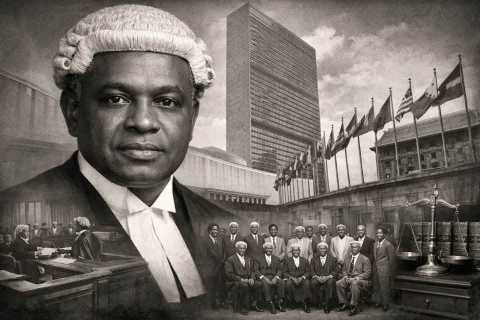
What was Nuremberg? Permit me a history lesson. In 1945, at the end of the Second World War, the victorious Allies faced a question: what do you do with the leaders of a regime that committed crimes on an industrial scale? Churchill at one point favoured summary execution. Stalin wanted show trials. The Americans insisted on something history had never seen: real trials, in open court, with defence lawyers, documentary evidence, and independent judges.
So in the German city of Nuremberg, twenty-four of the most senior surviving Nazi leaders, ministers, generals, bankers and propagandists, were placed in the dock before the International Military Tribunal. Not lynched. Not exiled. Tried. Prosecutors buried them under the regime's own paperwork: orders, ledgers, memoranda, each man's signature convicting him. Twelve were sentenced to death, others to long imprisonment, and three were acquitted, proof these were genuine trials, not victor's revenge.
Nuremberg established principles that changed the world. I was only following orders is no defence. Heads of state are not above the law. Crimes against a people, crimes against humanity, can be prosecuted no matter how powerful the perpetrator. And the subsequent Nuremberg trials went down the chain: the judges who legitimized tyranny, the industrialists who profited from slave labour, the doctors who abused their oath. The enablers, not just the chiefs.
Why does Nigeria need its own Nuremberg? Because the paperwork already exists. NEITI's audits. The Auditor General's queries. The Senate committee's 210 trillion naira demand. The IMF's findings. The Swiss court records. The BVI company registries. The London and Florida property filings. Like Nuremberg, the regime's own documents will convict it.
The evidence is no longer hidden. It is published, audited, and stamped by institutions that cannot be dismissed as opposition propaganda. Consider the ledger of a looted nation.
The charge sheet, in numbers. The IMF's own resident representative in Nigeria disclosed this month that the federal government engaged in extrabudgetary spending equivalent to 2 percent of GDP, roughly 8.83 trillion naira spent in 2025 entirely outside the budget, beyond legislative oversight. Nigeria's Senate Committee on Public Accounts is demanding that NNPC account for 210 trillion naira, about 117 billion dollars, from its 2017 to 2023 financial statements: 103 trillion naira in claimed accrued expenses and 107 trillion naira in receivables the company partly attributed to funds held in defunct banks it could not even name. The committee chairman, Senator Aliyu Wadada, asked the obvious question: how could NNPC claim to have paid 103 trillion naira in cash calls in one year when it generated only 24 trillion naira in revenue over five years, and when cash call arrangements were abolished in 2016? The current Group CEO declined to appear in person, sending a letter instead, while the former NNPC chief, sacked in April after multiple petitions, denies wrongdoing as anti-corruption agencies continue their probe.
This is not new. It is a forty-year pattern. NEITI, the government's own extractive industries watchdog, found after successive audits that NNPC and its upstream subsidiary NPDC failed to remit 21.778 billion dollars and 316 billion naira to the Federation Account, including withheld dividends from Nigeria LNG spanning 2004 to 2014, with NEITI's Executive Secretary calling for criminal proceedings against anyone found wanting. NEITI's 2021 audit alone found NNPC and thirteen other agencies failed to remit 9.85 billion dollars in a single year, 8.47 percent of the entire 23 billion dollars the federal government earned. Of the 23 billion dollars due to the Federation from oil and gas in 2021, only 13.2 billion dollars, some 57.3 percent, was actually remitted. SERAP has demanded a presidential panel of enquiry, noting the NNPC Group spent 6.931 billion dollars on behalf of the Federal Government without any National Assembly appropriation, and took a 3 billion dollar loan for subsidy payments with no disclosure of the beneficiaries.
Add what the world already knows. The Abacha loot, billions traced through Swiss, British and American banks, still being repatriated in tranches decades later. A former petroleum minister facing corruption charges in both Nigeria and the United Kingdom. The 11 billion dollar P&ID arbitration award that English courts found was procured by fraud and bribery, a scheme that nearly cost Nigeria a third of its reserves. The no-bid billion-dollar infrastructure contracts flowing to a contractor with a Swiss money laundering conviction and a United States deferred prosecution agreement. And now a phantom Presidential Foreign Intervention Promotion Council that occupied offices in the Federal Secretariat, hosted ambassadors, and appeared in the signed 2026 Appropriation Act with 1.3 billion naira allocated to an agency the Presidency itself now calls fictitious.
Every naira in that ledger is a hospital without medicine, a school without a roof, a generation driven to the desert and the Mediterranean. This is not mismanagement. It is economic violence against 220 million people.
So what must happen when this administration ends? Nigeria must convene special accountability tribunals on Nuremberg's principles.
First, open trials with full due process. Every official, contractor, enabler and bagman placed before independent judges in open court, with the contracts, bank records and offshore filings laid bare for the world. Genuine trials, where the innocent walk free and the guilty are condemned by evidence, not by mobs.
Second, no one above the law. Ministers and group managing directors. The security officials who brutalized citizens, investigated and tried for every documented abuse. The paid propaganda networks that harassed journalists and whistleblowers into silence, exposed and held liable under law. The foreign banks, lawyers and fixers who laundered the loot, pursued from London to Geneva to the British Virgin Islands, with mutual legal assistance treaties invoked in every jurisdiction.
Third, I was only following orders is no defence. The permanent secretary who signed, the accountant who moved the funds, the aide who registered the shell company. Nuremberg settled that question eighty years ago.
Fourth, asset recovery as restitution. Every recoverable dollar traced, frozen, repatriated and ring-fenced by law for schools, hospitals and power, published quarterly so the people see their money return.
Not vengeance. Justice. Nuremberg's genius was that it refused revenge and chose law, and in doing so discredited an entire criminal order forever. Germany rose from the ashes partly because Nuremberg drew a line the whole world could see. That is what Nigeria needs: public, documented, irreversible justice, so no future criminal-in-chief can regroup the same network under a new banner. Impunity is the seed of every Nigerian tragedy. Trials, verdicts and asset recovery are how we salt that ground forever.
Nigeria does not lack talent, oil, or brilliant children. It lacks consequences. Let the end of this era be the day consequences finally arrive.
ABOUT THE AUTHOR: Kio Amachree, Founder and President, Worldview International — Letters from Stockholm
#penglobaldiscourse #NigeriaAccountability #NurembergMoment #NNPC210Trillion #MissingBillions #EndImpunity #TinubuMustAccount #PFIPCScandal #AssetRecovery #CrimesAgainstThePeople #NigeriaDeservesJustice #WorldviewInternational #LettersFromStockholm